|
Happy New Year! Welcome to our January 2026 Newsletter!
|
| |
|
A new year arises! We are facing turbulent times, at the same time that we are energized to take care of each other, supporting our communities and developing meaningful initiatives of solidarity, radical care and border defiance! We may be still shaken by the events that have already taken place in this new year but, as a community of engaged scholars, practitioners and activists, we want to continue making all possible efforts to, as Báyò Akómoláfé (an invited guest at the upcoming ICCP 2026 Lagos) suggests, "stay with the trouble", keeping our focus on resistance, peace, social justice and "making sanctuary".
In this newsletter we share the main topics discussed during our last ECPA General Assembly and provide you with a summary of ECPA's last webinar, entitled ICCP 2026 Lagos: An Invitation to European Community Psychologists, where Moshood Olanrewaju (SCRA President) and other co-organisers of the upcoming ICCP 2026 Lagos kindly shared information on safety, security and logistical practicalities. In the Community Notice Board, we share the recording of a recent SCRA webinar titled The Gaza Effect: From De-colonial Struggle to Global Liberation and the upcoming screening of animated film "Removed" at the Northampton Film Festival, a co-creation of ECPA President Francesca Esposito and a group of women with lived experiences of border violence, engaged research and activism. On Recommended Readings, we share a couple of suggestions by our new board member Simona Hendrychovà.
We hope you enjoy! |
| |
|
ECPA General Assembly 14/01/2026, 16h GMT, 17h CET
Agenda:
- ECPA Updates
- New Website
- ECPA Elections
- NEW board members
ECPA Updates:
Thanks to everyone who made the Lisbon conference possible! The organising team just finished the book of abstracts and there is a Special Issue in preparation for the Journal Community Psychology in Global Perspective.
ECPA anniversary! It's been 30 years of networking and 20 years as an official association. Congratulations to all members!
Updates 2025:
1. Membership: Community continues to grow particularly after the ECPA conference in Lisbon (115 members). More nationalities were added and more students have joined. Welcome all!
2. ECPA call to action: We now have 14 collaborators interested in helping ECPA to develop new activities, including an award committee, a new charter of values, a mapping activity of CP in Europe, new webinars, and more. We plan on hosting a kick off meeting for the new activities soon! Meanwhile, the call is still open here. We encourage new proposals, more engagements/conversations and projects. Join us!
3. Newsletter Our subscribers are now almost 500! Thank you for joining us and please send us your suggestions for new content, including CP news, events, calls for papers, and more. Please use this newsletter as your own community space!
4. Webinar series We hosted 2 webinars in 2025 and you can check the recording of the first (the second webinar was not recorded due to safety reasons) on Youtube. Please feel free to present new ideas for 2026 webinars.
5. Maric Lorusso, our student engagement board member concluded their PhD! Congratulations, Maric! They will be stepping down from the role this year and new members will be added to the team. Aside from Maric, two other members decided to step down from the board, due to other responsibilities: Megan Vine and Miles Thompson. We thank them for their hard work and collaboration during the last two years and wish them the best on their future endeavours!
Website:
We want to move towards a more professional website and will be looking for a service that can provide a new platform and layout to improve our interaction with members. Stay tuned!
Financial Updates:
Balance updated and approved by all members in the general assembly.
ECPA Elections:
The votes for the ECPA President and Treasurer 2026-2028 were done online. The turnout was 34,8% of our members. 37 votes were attributed to Francesca Esposito for President and 38 votes to Fortuna Procentese for Treasurer. There were 5 blank votes. The new nominees are therefore elected. Congratulations to Francesca and Fortuna!
Francesca Esposito shared her goals of the new mandate: to expand ECPA and connect with new CP groups beyond Europe, improving community psychology networking and scholarship.
New Members:
Anna Zoli and Simona Hendrychová will join the new board … WELCOME and good luck to the new board! The board remains open to new members and collaborations! |
| |
|
Special webinar ICCP 2026 Lagos: An Invitation to European Community Psychologists, Monday, 19th of January, 6PM CET
ECPA hosted a dialogue with with Moshood Olanrewaju (SCRA President) and other co-organisers of the upcoming ICCP 2026 in Lagos, Nigeria.
The International Conference of Community Psychology is an event that occurs biannually to foster important trans-national networks of people engaging in community psychology work.
The 2026 ICCP in Lagos will ignite energies for building a collective compost site to practice an appreciation for our natural local ways of being, our deep sense of interconnectedness, and a renewed pride in enacting our own psychologies for community healing, resisting, and organizing.
Waterways … the main title and theme of the 2026 ICCP, refers to acknowledging the power of our connections, no matter how far we have traversed. Much like water, its power is inherent and is also in the conditions in which it is held. We hope to create the conditions for celebrating a re-convening for everyone who is tracing a connection back to the motherland. We view this sanctuary as a liberatory revisiting of our shared humanity – for people of all descents. When you leave, you not only leave with new information, you leave with the home embodied within your person. We see this gathering as the beginning of new ways of connecting with everyone worldwide.
We invite you to submit a proposal for Nia Magic Roundtables, Letsema (Community Workshops), Timbuktu: A Gathering of Minds (Exhibition), Akụkọ Ifo N'Ọnwa (Tales-by-Moonlight), Bashiri: The Circle of Creators and Griots (Ignite Sessions), or Ananse: The Web of Knowledge (Symposiums). See the 2026 website for more information about the formats and themes at this link by February 2, 2026.
Health, Safety and Security
The organisers clarified that despite the reports produced by western-based embassies concerning travel advice to Nigeria, Lagos is one of the safest cities in Africa. It is a cosmopolitan city, visited by millions of people per year, particularly in December (Detty December), when one of the main festivals, Eyo, occurs. Around the hotel and the conference site there are plenty of hospitals and clinics that have agreements with western insurance companies. If you have specific questions concerning health and safety please reach out to the organisers.
Registration and estimated costs
Early bird registrations were extended until January 31, 2026. Please check the details here.
Lodging for 4 nights at the conference hotel (includes breakfast) ranges 935$. Other options of lodging are available, we encourage you to reach out to the organisers for further information. Diners (estimated 20$ each, are not included). Together with the early bird registration (includes VISA for Nigeria, conference attendance and airport transfer) the estimated costs (excluding airfares and travel insurances) range 1415$.
The organisers also encourage attendees to learn more on the preconference and postconference programmes. |
| |
|
Community Notice Board
The Gaza Effect: From De-colonial Struggle to Global Liberation
For those who were unable to attend, or who would like to revisit the discussion, the full recording of the webinar “The Gaza Effect: From De-colonial Struggle to Global Liberation is now available on SCRA's YouTube channel. SCRA International Committee will be organizing an upcoming session focused on Sudan. More details will be shared soon. |
| |
|
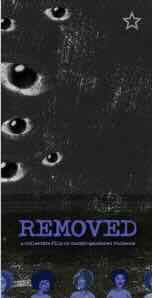
REMOVED screening at the Northampton Film Festival
Removed tells the story of one woman - Hope - from the moment she is taken from her home, without warning, without trial, in the middle of the night by immigration enforcement officers and taken to an immigration removal centre.
Removed originated from a qualitative piece of research into the gendered harms of immigration detention carried out by ECPA President, Francesca Esposito. It has since evolved into a much more far-reaching project due to the relationships which formed with women affected by immigration detention who were invited to input to the research over the course of two years (2021-2023).
During the course of research, it became clear the potential of the animation as an alternative and meaningful means to disseminate research-informed insights in our communities and contribute towards transformative bottom-up changes. By visualising what goes on in detention centres, the project aims to increase public knowledge on the harms of detention.
The animation was developed following a participatory process from writing the script collaboratively, with those who have lived through detention, to getting feedback at every stage of the process and potential audience members. |
| |
|
Recommended Readings
Kopano Ratele - The World Looks Like This From Here
Innovative in form and content, The World Looks Like This From Here offers thoughts about the ideas, contestation, urgency and desire around a psychological praxis in Africa for Africans. Setting out a situated, pluralising framework for researching, teaching and practising African psychology, the book urges reflection on and reconsideration of how the discipline is taught and practised on the continent. Writing against the universal application of a Western model of psychology, which is unreflective about its locatedness even as it pushes Africa to the margins, Ratele urges readers to engage and think deeply about new ways of seeing and thinking about the self and others. He asserts that the deliberate attempt to see the world from Africa – to look at everything with the whole self from here – leads to heightened consciousness about ways of being in the world, and enhances the capacity for healing. This lyrical, philosophical and poetic treatise is a cogent and timely response to the call for the decolonisation of social sciences and other disciplines.What does the world look like from Africa? What does it mean to think, feel, express without apology for being African? How does one teach society and children to be African – with full consciousness and pride? In institutions of learning, what would a textbook on African-centred psychology look like? How do researchers and practitioners engage in African social psychology, African-centred child development, African neuropsychology, or any area of psychology that situates African realities at the centre? Questions such as these are what eminent professor of psychology Kopano Ratele grapples with in this lyrical, philosophical and poetic treatise on practising African psychology in a decolonised world view. Employing a style common in philosophy but rarely used in psychology, the book offers thoughts about the ideas, contestation, urgency and desire around a psychological praxis in Africa for Africans. While setting out a framework for researching, teaching and practicing African psychology, the book in part coaxes, in part commands and in part urges students of psychology, lecturers, researchers and therapists to reconsider and reach beyond their received notions of African psychology.
Social Science for Social Justice
Book series from Sage that provides a platform for academics, journalists, and activists of color to respond to today’s pressing social issues. The series challenges the Ivory Tower of academia – in which Black, Asian and minority ethnic voices are underrepresented – by defining the “expert” not as someone who extracts data from a community, but someone who works within and alongside communities, gives back, and amplifies voices. The series is interdisciplinary and international in scope, and provides rigorous analysis and radical thinking in clear language that is accessible to readers both within and outside of academia. |
| |
|