|
Welcome to our May Newsletter!
|
| |
|
This month, ECPA brings into the spotlight the resistance of the LGBTQIA+ community. In these troubling times, the rights, dignity, and safety of LGBTQIA+ people, especially trans and non-binary people, have been increasingly threatened across many parts of the world.
As community psychologists, practitioners, researchers, educators, organisers and allies, we cannot remain silent. This newsletter is dedicated to affirming the fundamental rights of all people to live freely, safely, visibly, and with dignity. We are called not only to understand oppression, but to actively resist it. We know that exclusion, discrimination, and violence are not isolated experiences; they are sustained through systems that fracture communities, silence voices, and deny people the right to belong. Against this, we affirm care as collective action, solidarity as practice, and community as a site of resistance and transformation.
This newsletter addresses three invitations to our membership: 1) to strengthen our commitment to protecting and nurturing ourselves and our local communities, building meaningful alliances across movements, 2) to defend gender affirmation and bodily autonomy, and 3) to create spaces where LGBTQIA+ people can thrive without fear.
In moments marked by political uncertainty, backlash, and polarization, community care becomes both an ethical responsibility and a political act. We believe that another future is possible, one grounded in justice, mutual support, participation, and radical belonging. The ECPA statement on the 17th of May - presented next - is a reminder that resistance should not be carried alone: it is woven through relationships, collective action, and the courage to stand beside one another. May it inspire dialogue, collective action, and renewed resolution to keep building communities where everyone is free to exist, express themselves, and flourish. |
| |
|
ECPA Statement on the 17th of May - International Day Against Homophobia, Biphobia, Intersexphobia and Transphobia (IDAHOBIT)
On the 17th of May, we marked the International Day Against Homophobia, Biphobia, Intersexphobia and Transphobia (IDAHOBIT), a particularly significant date for those working in psychology, health and wellbeing. The date recalls May 17, 1990, when the World Health Organization (WHO) removed homosexuality from the International Classification of Diseases (ICD), marking a fundamental step in the depathologisation of sexual orientations.
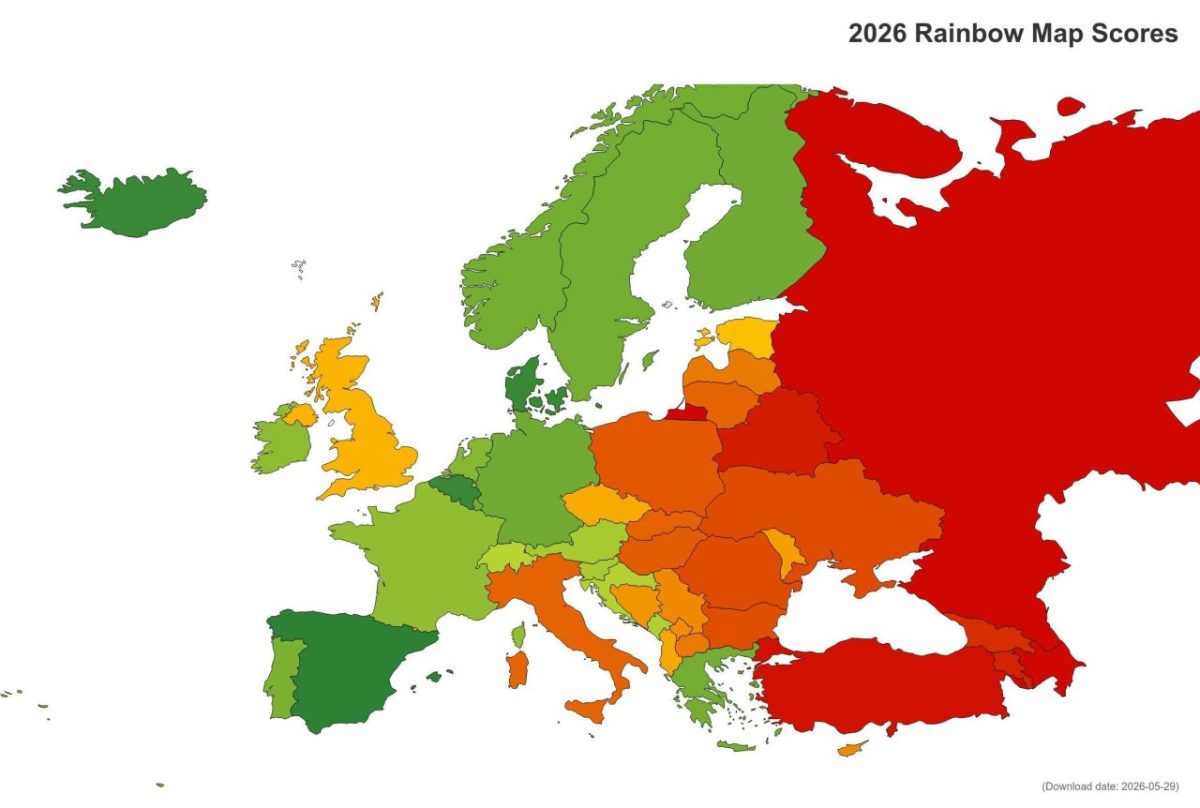
However, Europe is still far from being a safe space for LGBTQIA+ people. Each year, ILGA-Europe publishes the Rainbow Map which ranks 49 European countries from 0% to 100% according to laws and policies affecting the human rights of LGBTI people. The 2026 Rainbow Map confirms that legal protections remain uneven and that many countries continue to score very low on equality and human rights indicators. |
| |
|
Pathologisation also remains a pressing issue, especially for trans and nonbinary people. TGEU’s Trans Rights Index & Map documents the legal situation of trans people across Europe and Central Asia, including requirements related to legal gender recognition, healthcare, non-discrimination, asylum, hate crime and family rights. Although the WHO has moved gender incongruence out of the chapter on mental and behavioural disorders and into the chapter on conditions related to sexual health. in order only to guarantee access to care, gender affirmation in many contexts is still shaped by diagnostic and pathological frameworks (WHO, ICD-11).
At the same time, we are witnessing a rise in conservative and anti-gender movements across Europe, with LGBTQIA+ rights, especially trans rights, increasingly under attack.
In this regard, we echo the words of TGEU Chair Isa Nico Borrelli:
“Trans rights are not moving forward because of governments. They are moving forward because trans people, activists and communities are forcing change against all odds. But our rights should never depend on our capacity to resist. Across Europe and Central Asia, governments must uphold democracy and the rights of trans people or be remembered for undermining both.”
As community psychologists, we are called to advocate for LGBTQIA+ communities and to stand against the rollback of rights that have been achieved through decades of struggle. The 17th of May should also remind us, as psychologists, of the social and political weight of mental health diagnoses: how they shape institutions, access to care, public imaginaries and people’s everyday lives. As ECPA, we advocate for the full depathologisation of trans and nonbinary experiences across Europe, and for psychological knowledge and practice that affirm dignity, self-determination and collective wellbeing.
As community psychologists, we draw on a strong disciplinary tradition rooted in action research, social justice and the recognition of communities as experts of their own experiences. In the current context, trans activists, queer community members and grassroots organisations are carrying an enormous burden of resistance, care and advocacy. Their work is essential, but it should not be the only force sustaining change. From our institutional and professional positions, we have a responsibility to stand with these communities, support their struggles and contribute to transforming the social, political and health systems that continue to produce exclusion. |
| |
|
Amare, sostenere, affermare. Crescere famiglie trans* inclusive [“Love, Support, Affirm: Raising Trans*-Inclusive Families”]
We are pleased to share the publication, in Open Access, of the volume “Amare, sostenere, affermare. Crescere famiglie trans* inclusive”; [“Love, Support, Affirm: Raising Trans*-Inclusive Families”], edited by Maric Martin Lorusso, Michela Mariotto and Cinzia Albanesi. Maric Martin Lorusso and Cinzia Albanesi are both members of the ECPA Board.
The book looks at trans* experiences from a perspective that foregrounds not only discrimination and distress, but also euphoria, joy, self-determination, meaningful relationships and contexts that can make a difference: supportive families, inclusive school policies, affirmative educational and clinical practices, community networks and trained professionals.
The volume was created with the aim of making scientific and situated knowledge accessible in Italian, as this knowledge too often remains available only in English and in academic journals. It is a collective book that brings together the voices of trans* and nonbinary people, parents, activists, scholars and professionals. Across its chapters, the volume weaves together research, lived experiences, critical reflection and care practices, placing families, schools, clinical settings, language and social contexts at the centre of processes of recognition, self-determination and wellbeing, from childhood to adulthood.
The book is available in Italian and in Open Access here. |
| |
|
Neptune Frost (2021)
Afrofuturist musical co-directed by Saul Williams and Anisia Uzeyman and starring Cheryl Isheja, Elvis Ngabo and Kaya Free. Set in a post-civil war Burundi spanning past, future, and present times, the film follows the relationship between an intersex hacker and a coltan miner.
Born in Flames (1983)
Directed, produced and co-written by radical intersectional feminist Lizzie Borden, this utopian/dystopian docufiction drama is set ten years after the most peaceful revolution in United States history, and presents how the issues of many groups - minorities, liberals, gay rights organizations, feminists - are dealt with by the government.
We Are Lady Parts (2021-)
British TV sitcom created, written, and directed by Nida Manzoor. The series follows a British punk rock band named Lady Parts, which consists entirely of Muslim women. A look at the highs and lows of the band members that make up a Muslim female punk band, Lady Parts, as seen through the eyes of Amina Hussein, a geeky PhD student who is recruited to be their unlikely lead guitarist.
Wildhood (2021)
Canadian coming-of-age romantic drama film, written and directed by Bretten Hannam, where two brothers embark on a journey to find their birth mother after their abusive father had lied for years about her whereabouts. Along the way, they reconnect with their indigenous heritage and make a new friend. |
| |
|